For medical device and rehabilitation brands, product return rates directly affect profit, customer satisfaction, and brand reputation. Mobility aid products such as rollators and walkers are closely related to user safety and daily independence. If the product does not meet user expectations, returns can happen quickly.
Reducing return rates for mobility aid products requires more than after-sales service. It starts from product design, manufacturing quality, packaging, instructions, and market communication.
Why Do Mobility Aid Products Get Returned?
Mobility aid products are often returned because of poor fit, unclear usage, unstable quality, shipping damage, or a mismatch between product claims and real user needs.
Common return reasons include:
The product is difficult to assemble
The size or height range does not fit the user
The product feels unstable during use
Wheels, brakes, or folding parts do not work smoothly
Accessories are missing or unclear
Packaging is damaged during transportation
Product descriptions create unrealistic expectations
For brands, these problems are not only after-sales issues. They are also product development and supply chain issues.
1. Improve Product Design Based on Real User Scenarios
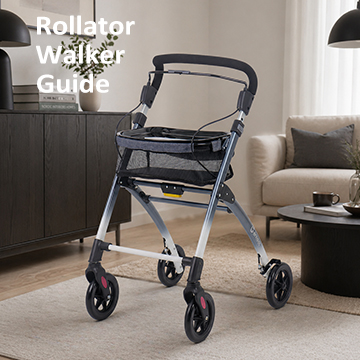
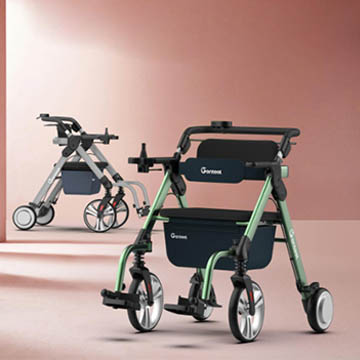
The first step to reducing returns is designing mobility aid products around real use scenarios. A rollator for outdoor use may need larger wheels and a stronger frame, while an indoor rollator should focus on compact size and easy turning.
When product functions match user scenarios, customers are less likely to feel disappointed after purchase.
2. Make Assembly and Operation Easier
Many returns happen before the product is fully used. If the customer cannot assemble the product easily, they may assume the product is defective.
Brands can reduce this risk by improving:
Tool-free or simplified assembly design
Clear instruction manuals
Step-by-step installation labels
QR codes linking to assembly videos
Better packaging layout for parts and accessories
For mobility aid products, easy assembly is part of the user experience, not just a packaging detail.
3. Strengthen Quality Control During Manufacturing
Stable quality is essential for reducing return rates. Small defects in brakes, wheels, joints, screws, welding, or surface treatment can lead to returns, complaints, or safety concerns.
A professional mobility aid manufacturer should control quality through incoming material inspection, in-process inspection, final inspection, and product testing. For products related to user mobility, consistency is especially important.
Brands should work with manufacturers that understand rehabilitation products and can maintain quality from sample development to mass production.
4. Use Packaging That Protects the Product
Mobility aid products are often large, foldable, or made with multiple components. Poor packaging can cause scratches, deformation, missing parts, or transportation damage.
Return rates can be reduced by using stronger cartons, reasonable inner protection, clear part placement, and packaging tests when necessary. Packaging should be designed together with the product, especially for e-commerce and international shipment.
5. Align Product Claims with Real Performance
Over-promising is a common cause of returns. If a product page promises comfort, stability, or easy use, the product must deliver that experience.
Brands should make product descriptions accurate and specific. Instead of vague claims, use clear information such as height range, weight capacity, wheel size, applicable scenarios, folding method, and key safety features.
Accurate product communication helps customers choose the right product before purchase.
How Genteel Helps Brands Reduce Return Rates
Genteel supports medical device and rehabilitation brands with OEM and ODM manufacturing solutions for mobility aid products. Through product development, sample verification, production control, inspection, and packaging customization, Genteel helps brands improve product consistency and user satisfaction.
For mobility aid projects, Genteel can support:
Product structure optimization
OEM and ODM customization
Sample and prototype development
Quality control during production
Packaging and labeling customization
Product configuration adjustment
Manufacturing support from concept to delivery
By working with an experienced mobility aid manufacturer, brands can reduce avoidable returns and build a more reliable product line.
Conclusion
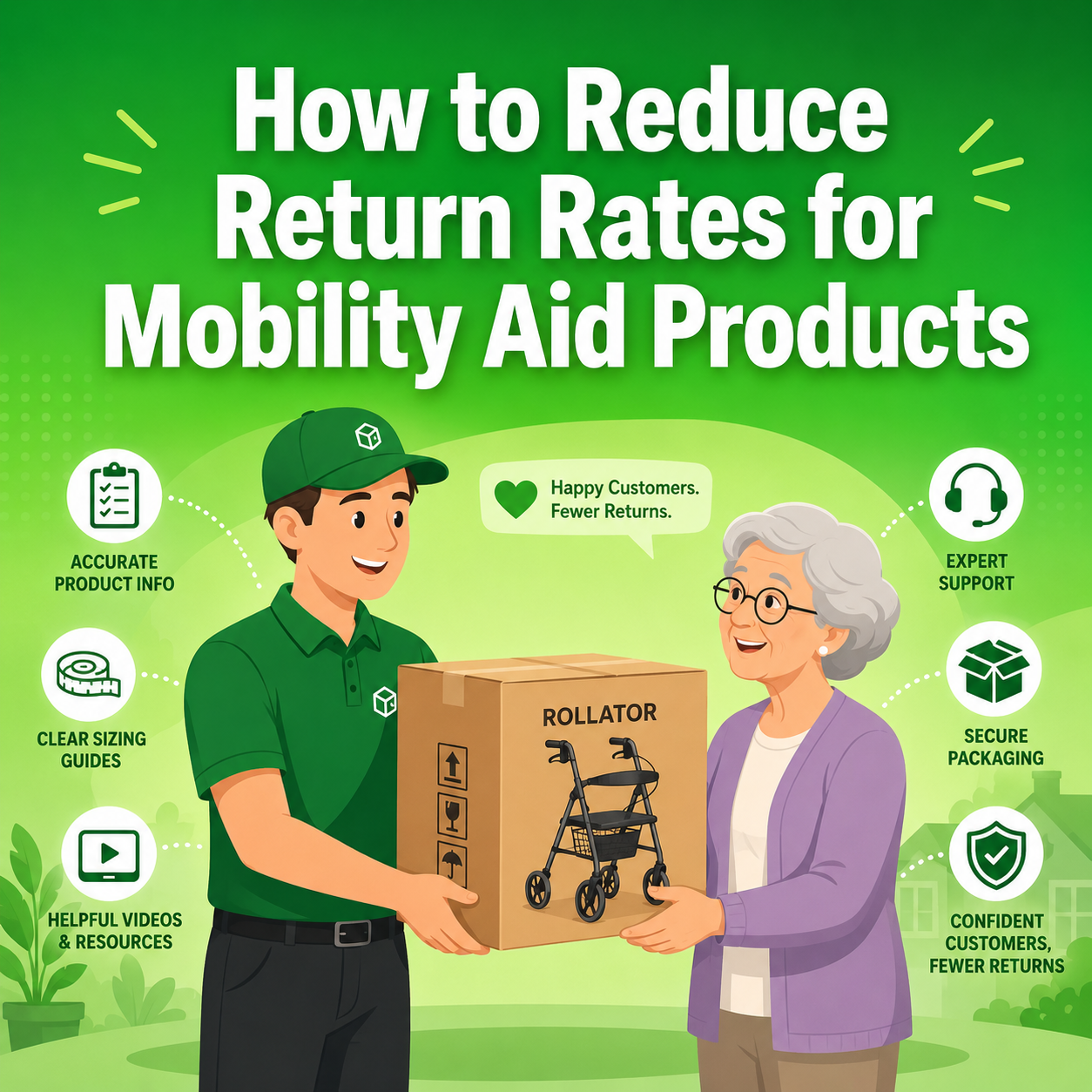
Reducing return rates for mobility aid products starts before the product reaches the customer. Better design, easier assembly, stable quality, protective packaging, and accurate product communication all help reduce unnecessary returns.
For rehabilitation and medical device brands, choosing the right manufacturing partner is one of the most effective ways to improve product reliability and customer satisfaction.
FAQ
What causes high return rates for mobility aid products?
Common causes include poor assembly experience, unstable quality, size mismatch, shipping damage, unclear instructions, and inaccurate product descriptions.
How to reduce returns for rollators and walkers?
Brands can reduce returns by improving product stability, wheel and brake performance, folding design, assembly instructions, packaging protection, and product information accuracy.
Why is quality control important for mobility aid products?
Quality control helps ensure that key components such as frames, brakes, wheels, joints, and fasteners remain consistent and safe during use.
Can OEM and ODM manufacturing help reduce return rates?
Yes. OEM and ODM manufacturing can help brands improve product design, configuration, packaging, labeling, and quality control, which can reduce avoidable returns.