Are you developing a mobility aid and wondering whether carbon fiber, aluminum, or steel is the right frame material?
The wrong choice can lead to products that are too heavy for end users, too expensive for your target market, or too fragile for real-world use. For OEM and ODM buyers, material selection directly impacts product positioning, manufacturing cost, and customer satisfaction.
In this guide, Genteel — an experienced rehabilitation equipment manufacturer — breaks down the pros, cons, and best-use cases for each frame material. Whether you are sourcing rollators, walkers, or transport chairs, this comparison will help you make informed decisions for your product line.
Why Does Frame Material Matter?
The frame is a key structural component of a mobility aid. It supports the user’s weight and connects important components such as wheels, handles, seats, and braking systems.
Selecting an appropriate material can influence several aspects of product performance:
Weight and portability: A lighter frame can make a mobility aid easier to lift, fold, transport, and store.
Strength and stability: The frame must withstand expected loads and forces during everyday use.
Corrosion resistance: Material properties and surface treatments affect performance in humid environments and during regular cleaning.
Manufacturing cost: Raw material prices, processing requirements, and production volume all influence the final product cost.
Product positioning: Material selection can help brands develop products for budget-conscious, mainstream, or premium markets.
No single material is ideal for every mobility aid. Manufacturers need to balance these factors rather than choosing a frame material based on weight or price alone.
Prisma Carbon Fiber Rollator 9633 Its leg tubes are made of carbon fiber.
Carbon Fiber vs. Aluminum vs. Steel: What Are the Differences?
Carbon Fiber Frames
Carbon fiber is a lightweight composite material known for its high strength-to-weight potential. It is often used in premium mobility products where reducing weight is a major priority.
Advantages:
Very low material density compared with steel.
Excellent potential for lightweight structural designs.
Good corrosion resistance of the composite itself, although mixed-material joints may require appropriate isolation and corrosion-control design.
Suitable for premium products where portability and product differentiation are important.
Considerations:
Generally has the highest material and manufacturing cost of the three options.
Requires specialized manufacturing processes and careful structural design.
Damage may be more difficult to assess and repair than damage to conventional metal frames.
Carbon fiber can be a suitable choice for lightweight rollators and transport chairs, particularly when brands target users who value easy handling and premium product features.Surface options for carbon fiber frames can use clear-coated woven surfaces, painted finishes, or cosmetic outer plies with different weave appearances, depending on the desired product aesthetic.These options allow brands to create distinctive, high-end product aesthetics.
Easy Stride Rollator (Large) 9621 Its leg tubes are made of aluminum.
Aluminum Frames
Aluminum is widely used in mobility equipment because it offers a practical balance between weight, performance, corrosion resistance, and cost.
Advantages:
Significantly lighter than steel at the same material volume.
Good corrosion resistance under appropriate conditions.
Suitable for a variety of tube-based frame designs.
Offers a balance between portability and product cost.
Considerations:
Usually costs more than conventional steel for comparable raw material quantities.
Lower stiffness than steel at the same dimensions, so the frame design may need different tube sizes or reinforcement.
Welding and other manufacturing processes must be properly controlled.
Aluminum is a practical option for many everyday walkers and rollators. It is particularly useful when brands need to reduce product weight without moving to the higher cost of carbon fiber.Common surface treatments for aluminum frames include anodizing and powder coating. Anodizing can improve corrosion resistance and surface durability, while its appearance and performance depend on the specific anodizing process.
The base of the 9631 Tri-buddy Indoor Rollator is made of steel, which lowers the center of gravity and improves stability.
Steel Frames
Steel remains a common choice for mobility aids where affordability, structural performance, and established manufacturing methods are important. Although people often use the term “iron,” the frame material in most of these products is steel or a steel alloy, rather than pure iron.
Advantages:
Generally the lowest-cost option of the three.
High stiffness and good structural performance when appropriately designed.
Compatible with established cutting, bending, and welding processes.
Suitable for many standard and cost-sensitive mobility products.
Considerations:
Higher density means that steel frames are generally heavier.
Unprotected steel can corrode, so appropriate coatings and surface treatments are important.
The additional weight may make lifting and transportation less convenient.
Steel can be a suitable choice for standard walkers, rollators, and other products where cost control and a robust frame design are priorities.Common surface treatments for steel frames include powder coating, chrome plating, and zinc plating. Each offers different combinations of appearance, corrosion protection, cost, and process requirements.The right finish depends on the product's intended use environment and target aesthetic.
Weight, Cost, and Performance: A Side-by-Side Comparison
The following table provides a general comparison for product development and sourcing decisions.
Comparison | Carbon Fiber | Aluminum | Steel |
Relative material weight | Very low | Low | High |
Relative cost | High | Medium | Low |
Portability potential | Excellent | Good | More limited by weight |
Corrosion resistance | Generally good | Generally good | Requires suitable protection |
Manufacturing | Specialized composite processes | Metal fabrication | Established metal fabrication |
Typical market positioning | Premium | Mid-range to premium | Value-focused to standard |
Main advantage | Weight-saving potential | Balance of weight and cost | Cost efficiency and stiffness |
Important: This table compares general material characteristics, not guaranteed finished-product specifications. Carbon fiber is a composite whose properties depend on its fiber orientation and resin system. Actual frame weight and strength depend on the complete design, not material density alone.
For many conventional tube-frame applications, steel can offer a relatively economical starting point, aluminum offers a middle ground, and carbon fiber is usually selected when its weight-saving potential justifies the additional cost.
For OEM and ODM buyers, the most useful comparison is therefore not simply the price per kilogram. It is the total cost of producing a frame that meets the required weight, load capacity, durability, appearance, and manufacturing specifications.
Not sure which material fits your product line? Get a free material consultation from Genteel's engineering team — we evaluate your design, target weight, and budget to recommend the optimal frame solution. Contact us →
Which Frame Material Is Best for Different Mobility Aids?
Walkers
For standard walkers, steel can be suitable when affordability and a stable frame are priorities. Aluminum is worth considering when lower product weight and easier handling are important selling points.
The final choice should account for the intended user group, frame geometry, folding mechanism, and required load capacity.
Rollators
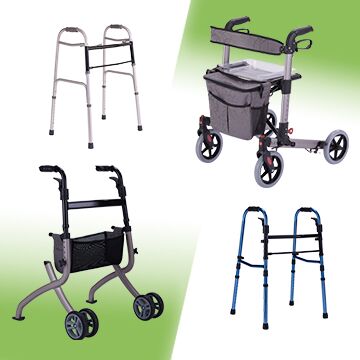
Rollators combine a frame with wheels, brakes, and often a seat or storage accessories. Because users or caregivers may need to lift the product into a vehicle, frame weight can have a noticeable effect on convenience.
Aluminum offers a practical balance for many rollators. Carbon fiber may be considered for premium lightweight models, while steel remains an option for products designed around cost efficiency.
Transport Chairs
Transport chairs are often moved by caregivers, folded for storage, and loaded into vehicles. Reducing frame weight can make these tasks easier.
Aluminum is a common option for balancing portability and cost. Carbon fiber may be appropriate for products targeting the premium lightweight segment, provided that the design and manufacturing costs fit the target market.
Does a Lighter Frame Mean a Stronger or Better Product?
Not necessarily. A lighter frame does not automatically mean that a product is stronger, safer, or more durable.
Material strength is only one part of structural performance. Tube diameter, wall thickness, joint design, welding quality, fasteners, and load distribution all affect how a mobility aid performs.
For example, an aluminum frame may need a different tube geometry from a steel frame to achieve the required stiffness. Carbon fiber components also require careful design because their properties depend on fiber orientation and the way loads are applied.
Manufacturers should evaluate the complete frame structure and verify that the finished product meets its intended performance requirements.
For buyers, it is useful to request product specifications, rated load capacity, relevant test information, and details of the manufacturer's quality control procedures rather than comparing materials by name alone.
Standards and compliance: Material and structural choices should also support the applicable performance requirements for the finished product. For example, ISO 11199-1 covers walking frames, ISO 11199-2 covers rollators, while ISO 7176-8 specifies static, impact and fatigue strength requirements for wheelchairs. The applicable tests depend on the product type, intended use, target market and relevant standard.
How to Choose the Right Material for Your OEM/ODM Mobility Aid Project
When developing a new mobility aid, OEM and ODM customers should consider five key questions:
Who is the target user? Consider whether users or caregivers need to lift, fold, or transport the product frequently.
What is the target selling price? Match material and manufacturing costs to the intended market position.
What performance is required? Define load capacity, stability, durability, and environmental requirements.
What manufacturing processes are available? Consider forming, welding, joining, finishing, and assembly requirements.
How will the finished product be verified? Establish suitable inspection and testing criteria before mass production.
Early communication between the customer and manufacturer helps align product design, material selection, production feasibility, and budget.
At Genteel, material selection is considered throughout OEM and ODM development, from prototype design to production. Our in-house R&D team and testing capabilities help evaluate frame designs against project requirements, manufacturing feasibility and applicable performance criteria before mass production.
Conclusion
Carbon fiber, aluminum, and steel each offer distinct advantages for mobility aid frames. Carbon fiber prioritizes lightweight design and premium positioning. Aluminum provides a practical balance between portability and cost. Steel offers an economical option with established manufacturing methods and good stiffness.
The right choice depends on the complete product design, intended users, performance requirements, and target price—not material properties alone.
For brands and distributors sourcing walkers, rollators, and transport chairs, partnering with an experienced manufacturer turns material considerations into a practical, production-ready product specification.
Ready to start your project?Contact Genteel's OEM/ODM team today →
FAQ
1. What is the lightest frame material for mobility aids?
Carbon fiber generally offers the lowest material density among these three options. However, the final product weight depends on frame design, dimensions, joints, and other components.
2. Is aluminum or steel better for walkers and rollators?
Aluminum is often preferred when portability and lower weight are important. Steel can be a better fit for cost-sensitive products. The final decision depends on design, load requirements, and target price.
3. How much more expensive is carbon fiber than aluminum or steel?
Carbon fiber generally has a higher material and manufacturing cost, while steel is usually the most economical option and aluminum sits between them. Exact price differences depend on material grade, frame design, processing, and order volume.
4. Does a lighter mobility aid frame mean lower strength?
No. Frame strength depends on material properties, structural design, tube dimensions, joints, and manufacturing quality. Every design must be evaluated against its intended load and performance requirements.
5. How Do I Choose the Right Frame Material for OEM Mobility Aid Manufacturing?
There is no universal best material. Steel suits many cost-focused products, aluminum balances weight and cost, and carbon fiber is an option for premium lightweight designs. OEM buyers should select materials according to target users, specifications, production feasibility, and budget.